Thinking about a book’s “other” audience (or: Could What Can’t Wait be “the” TFA novel?)


Somebody recently asked me this question: “Besides teens, who do you think is the most important audience for What Can’t Wait?”

Good question. Here’s my answer: What Can’t Wait wants to be read by middle school and high school teachers with high standards, especially those working in an urban setting or with students from economically disadvantaged backgrounds.

If I had the funds, I’d send a copy of What Can’t Wait to all current and future Teach For America corps members (especially in Houston) plus all you other awesome new teachers out there. (One TFA teacher told me that What Can’t Wait “should be the TFA novel.” Sweet.) And for folks who’ve been in education for a while, What Can’t Wait might chip away some of the crusty build-up we get after a while in the business.

So basically: teachers, y’all need to get your What Can’t Wait on.

Now, that is not because I wrote with teachers in mind but because What Can’t Wait has something to show teachers about what may be going on outside of the classroom. The hardships students face should not, of course, be viewed as excuses for low performance; we need teachers who challenge students to access resources and be strategic to get things done for themselves in education. But… in my experience, students are infinitely more receptive to challenge (ambitious goals, anyone?) when it’s accompanied by a strong sense of understanding of circumstances they may face.

One former TFA member sent me a message after reading What Can’t Wait saying, “Now I get why some of my best students were absent all the time.”

While What Can’t Wait takes readers into just one set of challenges (Marisa’s), for teachers, it can be the starting place for a more thorough engagement with students as complex human beings challenged by their circumstances. Start imagining their world outside of the classroom, and you start opening up opportunities for connection that can seriously stoke the fires of motivation.

Liam’s bath toys, soggy library books, and the perils of autopilot for writers

Here’s Liam in the midst of his

 What does my little boy’s bath time have to do with writing?

Let me start by describing Liam’s pre-bath routine: once the bath water is running, Liam grabs this basket of toys he has in the bathroom and starts pitching them into the tub one by one. There are about a zillion neon-colored plastic things and rubber ducks, but eventually he runs out. At that point, either I put him into the bathtub as well or he will find something else to throw in. Like the basket. Or the toilet paper stand. Or anything else that’s not nailed down. If we chose to store, I don’t know, a small stack of library books in that bathroom, they would now be a small, wet stack of library books swirling amid his rubber ducks.

My library books would be wet because once Liam is in his everything-in-the-tub mode, it’s hard to stop him. We writer types go on autopilot like that sometimes, too, tossing certain stuff (that description, a character type, certain ways of resolving conflict, chapter openings) into our drafts without a lot of thought to what it’s going to add to the experience. (And let me tell you: even if Liam throws them in, he is not crazy about swimming with library books.)

Don’t get me wrong: I’m not dissing automatic writing (like freewrites, where you just scribble or type and see what comes out). In fact, I’m a huge fan of zero drafting. It’s pretty much how I manage to get started writing anything.

Autopilot, though, is more or less the enemy. Two-dimensional secondary characters usually get written on autopilot. So does bad dialogue. And I’m guessing that when I can’t really say why I’m writing in first or third person, it’s because I just went on autopilot and did the thing I did last time.

Here’s my (unsolicited) advice: if you realize you just did your day’s writing on autopilot, don’t panic. Just flag that passage and know that, at some point, you need to go back and make sure you’re making decisions, not settling into familiar ruts. For now, you can keep writing; if you’re in the middle of a big project, chances are you haven’t derailed anything by a day of autopilot.

Eventually, though, you’ll need to make sure there are no soggy library books in your tub.

Deception Revealed: My Fear of Drive-bys

So last Friday I started a round of two truths and a lie, and here is the lie:

(1) At 7, I chose the bedroom farthest away from the street because I was afraid of being tempted to sneak out of the house when I was older.

The truth is that I chose the bedroom farthest away from the street because I was afraid of drivebys. Let me point out that this was a deeply irrational fear, given that Kilgore, Texas, is not exactly known for this particular sort of violence. I’m not even sure where I got the idea of drivebys… but I am sure of this: I was perfectly willing to sacrifice my older brother, Justin, who took the front bedroom and–in my imagination–would slow down the bullets coming my way. 

Horrible, I know. I still feel guilty about that. What kind of sister does that?!

As for the truths, both of which were IDed by some readers as the lie, let me explain.

(2) At 15, I advanced to state in a photography competition with an image entitled, “Hangin’ like a Hose.”

This really did happen, and I really did have that absurd title. It was a still life of the side of a shed, and there was a garden hose looped over a hook. My photography teacher at the time suggested the title, and I really didn’t have any better ideas. Sigh. I wish I had gone with “Still Life #348” or something.

(3) At 18, I got my first ticket in Austin, TX, for a curfew violation at Mt. Bonnell Park.

There may not be a city-wide curfew in Austin, but apparently this is what they write on the ticket when you are in a city park after sundown. Unfortunately for me and my love interest of the time, it’s difficult to know that the park closes at sundown if you arrive after sundown and the sign isn’t illuminated. My first brush with the law. Not very dramatic, eh?

The More of Art and “Ask Me” by William Stafford

http://www.flickr.com/photos/cdemo/5251194134

 “The greatest art offers us images by which to imagine our lives. And once the imagination has been awakened, it is procreative: through it we can give more than we were given, say more than we had to say.”

“We feel a spirit move in the poems that is neither ‘me’ nor ‘the poet’ but a third thing between.”

— excerpts from The Gift: Creativity and the Artist in the Modern World by Lewis Hyde

I haven’t read The Gift in its entirety, but I came across this quotation in one of my writer’s notebooks. Makes me want to read the whole book. Heck, makes me want to read any book just to feel that message with Hyde’s wisdom in the back of my mind making me aware of what is happening.

Here’s a favorite poem.

Ask Me
by William Stafford

Sometime when the river is ice ask me
mistakes I have made.  Ask me whether
what I have done is my life. Others
have come in their slow way into
my thought, and some have tried to help
or to hurt: ask me what difference
their strongest love or hate has made.

I will listen to what you say.
You and I can turn and look
at the silent river and wait.  We know
the current is there, hidden; and there
are comings and goings from miles away
that hold the stillness exactly before us.
What the river says, that is what I say.

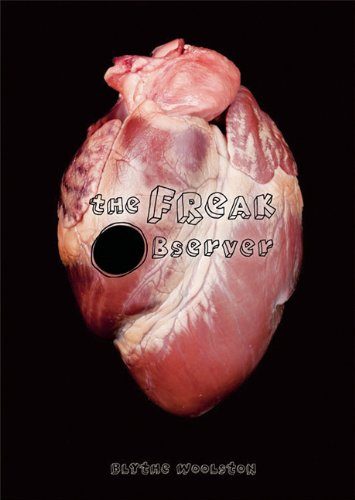
The Freak Observer is better than vodka

I’ve wanted to read The Freak Observer ever since I first heard about it (even before it won the prestigious Morris award). I mean, who wouldn’t want to read a book “about death, life, astrophysics, and finding beauty in chaos”?

Now that I’ve read The Freak Observer, I can see that folks aren’t kidding when they talk about the amazing, distinctive voice of Loa, the protagonist. Although in some ways her world is very different (rural, white) from the one I write about in What Can’t Wait (urban, mostly Hispanic), Loa and Marisa (my protag) would have plenty to talk about.

Loa is a bit more cynical and a bit more wounded than Marisa, but they both know what it means to be critical caregivers for younger siblings, contributors to family finances, and wallpaper to the lives of those around them. Marisa would relate to another gal who thinks things like, “The only time I look in the mirror on purpose is when I brush my teeth” (90). This bit is like something from Marisa’s world, too:

“Mom would sit at the kitchen table with the checkbook, a piece of scratch paper, and any bills that were waiting to be paid. It is one thing to be good at theoretical math; it’s another thing, probably better, to be able to figure out how to skate from one week to the next without pissing anybody off or getting stuck in the Payday-Cash-Now-Check-Into-Cash hamster wheel of economic hell” (98).

Another thing I liked about the book was how changes in Loa’s parents’ lives (like her mom going back to college) forced Loa to rethink her own notions of who she was. This reminded me a bit of the protag in Laurie Halse Anderson’s Catalyst. Loa thinks of herself as the one who keeps things running, the one who doesn’t fall apart. The idea that her parents aren’t locked into the dead-end path that she thought they were sort of shakes her up. This is classic Loa:

“We don’t accept welfare, we don’t buy shit on credit, and we don’t eat anything with paws. I though those were the rock-hard truths about this family, about who we are, but I may need to fiddle with the focus a little more. “We” may not be exactly who I thought. And that leaves ‘Me’ a little fuzzy around the edges (154).

Oh, and The Freak Observer gets bonus points in my book for the following passage:

“I try not to remember what they looked like, the skeleton puppets in brown dresses. I am not successful. It is very hard not to remember something. It’s easy to forget but very hard not to remember on purpose… I know that I can’t choose not to remember. I can’t choose the slide show in my imagination. I can practically hear my own neurons laughing at me. The little shits” (147).

Why the bonus points? I mean, aside from the awesome voice, which reminds me of a younger version of my best writing buddy (who also happens to be the funniest pessimist in the world)? The bonus points are because here’s a YA novel featuring something that actually relates to my own academic work. Because Loa is basically describing the shortcoming I see in a recent debate over this idea called “imaginative resistance.” But that’s sort of technical and boring, so I will save it for a post where I can figure out how to make the topic riveting.

The Freak Observer isn’t a plot-driven book, but it is a page-turner. Loa’s description of a collection of photography actually applies nicely to the book itself. The subject of these pictures was seeing… They were about looking and seeing…I just want to keep looking at pictures, swallowing up other people’s visions. It is better than vodka” (88).

The Freak Observer is better than vodka. Now go read it.

For more visions you’ll want to swallow up, check out Blythe Woolston’s blog.

Two Truths and a Lie: Caution, Photography, and Bad Behavior

Jessica R: http://www.flickr.com/photos/sheeshoo/

So here’s how it works. Below are three statements about me, two of which are true. Can you spot the lie? Comments or email are equally welcome!

(1) At 7, I chose the bedroom farthest away from the street because I was afraid of being tempted to sneak out of the house when I was older.

(2) At 15, I advanced to state in a photography competition with an image entitled, “Hangin’ like a Hose.”

(3) At 18, I got my first ticket in Austin, TX, for a curfew violation at Mt. Bonnell Park.

PS If you are as nosy as I am, you might want to check out earlier “2 Truths & a Lie” posts. Click  here for one, or just click the Two Truths and a Lie tag on this post. Happy snooping!

Climbing Maggie’s Bookshelf: is WCW an “issue” novel?

http://www.flickr.com/photos/erkinagsaran/369677941

Here’s the link to a guest post I did for Maggie’s Bookshelf in which I muse about what kind of issue novel What Can’t Wait would be if it were an issue novel and reveal how come there’s no glossary or insta-translation for the Spanish in my novels.

Check it out! While you’re there, read some of Maggie’s reviews. This girl’s so sharp she should have her own ninja fruit app. Okay… don’t judge her by my bad jokes; go experience her smarts. Last week I wished for a time machine so I could put her in my AP Lit class and teach her for a year. 

Newsflash: Character Loves Words (a rant)

http://www.flickr.com/photos/libbydorazione/4600612780/

There ought to be a database out there with all the characters in YA and MG novels who love books, dictionaries, literary allusions, or word play.

There ought to be such a thing so that I can print it out and write “WTF” in my prettiest penmanship over every freaking name.

Why the hate? It’s not hate. Really, it’s not. I mean, I’m pretty sure that I love words, writing, books, and so on as much as the next writer. When I was a teenager, I used to copy new words onto an index card. I’d even give the context and write a sentence of my own using the word. FOR FUN. I know, I know. You thought I couldn’t get any nerdier, and then…

My problem is that word lovers like us are seriously over-represented among the characters of the tween and teen literary scene. It’s this annoying trope that has me rolling my eyes even when the writer pulls it off convincingly and has me all, “oh, it’s so stinking cute when he plays word games with his girlfriend.”

Notice how I refrain from naming any names? That’s because, first of all, I really like a lot of books that would be on the list of offenders. Second of all, it probably wouldn’t be nice, and the laws of karma would dictate that my fourth novel or something will have a word fiend at its heart.

I know that teens who read probably, um, also like books. But they like other stuff, too. So I’m all for books where the character’s “thing” is not language. Like physics in The Freak Observer or drumming and music in Drums, Girls, and Dangerous Pie, to name examples from books I just read.

I’m so allergic to the whole English-is-fun-and-I-dig-language thing that I tend to overcompensate and make my characters haters on English. In What Can’t Wait, Marisa’s math teacher helps her with her college application essay (that’s how much she doesn’t want to get help from her English teacher). In The Knife and the Butterfly, Azael’s drawing and canning take the place that might otherwise be occupied by an obsession with language.

Any worst offenders in this category? Or should I change my last name to Cranky Pants and just shut up?

Thinking with Reviewers, part 2: one proof that teens know best

See-Ming Lee: http://www.flickr.com/photos/seeminglee/2149309015

(This week, I’m trying to overcome recent angst directed at one reviewer’s comments on YA fiction by reflecting on positive author-reviewer experiences.)

A sweet review from a YA reader makes me just as happy as a tree full of bright birdhouses (see pic above). I think the next time someone (ahem!) underestimates the saavy of teen readers, I’m going to send her or him over to Maggie’s Bookshelf. 

Full disclosure: Maggie liked What Can’t Wait. But what’s more important is that she articulates why with such grace and insight. For example, Maggie’s  thoughtful review  calls What Can’t Wait “an issue book that gives me exactly what I want out of an issue book while never really feeling like an issue book.” Maggie offers tons of thoughts on why it worked for her. 

Oh, and did I mention that Maggie is 16? I already told her that I’d like to pop her into a time machine and send her back to my AP Lit class in Houston so my former self can teach her for a couple of semesters.

But mainly: Maggie, I need you on the front lines when The Knife and the Butterfly comes out in spring of 2012. 

Chatting up The Happy Nappy Bookseller

Today I’m over at The Happy Nappy Bookseller for an interview as part of the Summer Blog Blast Tour. Check out the other author interviews from this week, too! The schedule is below… Happy touring!

Monday:
Tara Altebrando (Chasing Ray)
Shirley Vernick (Bildungsroman)
Jack Ferraiolo (The Happy Nappy Bookseller)
Sudipta Bardhan-Quallen (Writing & Ruminating)

Tuesday:
Sean Beaudoin (Chasing Ray)
Neesha Meminger (The Happy Nappy Bookseller)
Rachel Karns (Bildungsroman)

Wednesday:
Sarah Stevenson (Chasing Ray)
Emily Howse (A Chair, A Fireplace & A Tea Cozy)
Ashley Hope-Perez (The Happy Nappy Bookseller)
Olugbemisola Rhuday-Perkovich (Hip Writer Mama)

Thursday:
Tessa Gratton (Writing & Ruminating)
Micol Ostow (A Chair, A Fireplace & A Tea Cozy)
Maria Padian (Bildungsroman)
Genevieve Cote (Seven Impossible Things Before Breakfast)

Friday:
Genevieve Valentine (Shaken & Stirred)
Stacy Whitman (The Happy Nappy Bookseller)
Alyssa B. Sheinmel (A Chair, A Fireplace & A Tea Cozy)
Matthew Cody and Aaron Starmer (Mother Reader)

Twitter Facebook Goodreads RSS
All materials © 2026 Ashley Hope Pérez. Author website by Websy Daisy.